Showing posts with label obstructive sleep apnea. Show all posts

29 April 2015

JUST BREATHE: No, there are no magic pills for sleep apnea, and some magic pills just make it worse

Sorry, I cannot provide you a link to purchase these for your sleep apnea because they don't exist.
 
It would be so nice to just pop a pill and be done with sleep apnea, right? Except that because sleep apnea (the obstructive variety, anyway) is an issue of physiological mechanics, no pill can fix that.

(Not sure what sleep apnea is? Check out this great 3-minute video to learn how to differentiate snoring from sleep apnea.)

So there aren't any magic pills for OSA. Fine, you say. But wait! There are still plenty of drugs that can actually aggravate OSA (whether you have been diagnosed or not). This goes for all kinds of sleep disordered breathing, not just apnea.

Alcohol--Can't share this one enough. Alcohol may help you fall asleep, but you will always have a withdrawal effect a couple of hours later, after you metabolize your nightcap, which disrupts the remainder of your sleep all night. On top of that, it relaxes the airway structures in a way that encourages them to collapse.

Muscle relaxants--Makes sense, right? You have soft tissues in your airway but you also have muscles there, too. The muscles help keep the soft tissues from collapsing. Relax those muscles and you have more chances to develop an obstructed airway when you're asleep.

Sedatives--Sleep medications play a lot of tricks on your brain to get it to fall into a sleep-like state. One of the problems with sedatives is that they interfere with the neurochemical messages that your brain processes with relation to your blood's oxygen/carbon dioxide balance. Your brain normally startles you awake so that you take a breath when that imbalance hits a certain threshold. If you are taking sedatives, it will take longer for your brain and lungs to work together to avoid this depression of the respiratory system. The result will be more apneas; if you already have OSA, the result will be more severe apneas.

Cigarettes--So maybe a smoke relaxes you at bedtime. What's the harm? It also introduces irritants into the airway which cause the tissues there to swell in response, creating obstruction.

13 April 2015

JUST BREATHE: The easy, obvious way to deal with snoring and mild sleep apnea is to...

...sleep on your side.

Seems like common sense, right? People who sleep on their back and snore or have apneic episodes will quiet down immediately when they turn to their sides. 

In fact, people with the most severe sleep apnea rarely, if ever, sleep on their back (unless side sleeping gives them pain) because it's nearly impossible for them to get adequate oxygen while they sleep supine. Even when they aren't consciously thinking of it, their brains are taking over during bedtime, signaling the body to sleep laterally (right or left side) in order to open that airway just a wee bit more so the flow of oxygen in and CO2 out can continue unobstructed. 

Unfortunately, those with severe sleep apnea cannot get away with simply sleeping on their side; they will generally require a therapeutic device like a PAP machine to help them keep the upper airway open enough to allow for quality airflow. 

But for those who solely snore or who have mild sleep apnea (as determined by an overnight polysomnogram--mild, moderate and severe are terms that are assigned based on specific objective measurement protocols, not educated guesses), a simple, effective solution may, in fact, be to sleep on the side. 

According to the American Sleep Apnea Association, "Such people can eliminate or reduce airway blockage simply by learning to sleep on their side."

How can one achieve this when they are sleeping? After all, they aren't making conscious choices or decisions at this time. 

The simplest way to achieve this is to place a tennis ball in a sock, then pin the sock to the back of your sleep shirt. Who could sleep on their back with this annoyance in place? It works! 

If you want to get fancy, you can also buy a pajama top that is custom-built to "discourage supine sleeping," which is generally a sleep shirt with a tennis ball sewn into the back or tucked into a special pocket in the back. 

10 April 2015

JUST BREATHE: How to find out if you have a sleep breathing disorder

So your spouse tells you about your nighttime gasping, and you're waking up with headaches and dry mouth and your blood pressure has gone up. You realize, hmmm, it's time to find out if I have sleep apnea or some other related sleep breathing issue.

What can you expect to experience at the doctor's office when you go in?

Basics
The doctor will collect your health history, collect your vital signs and ask you about your chief complaint. They will also compute your body mass index, measure the circumference of your neck and maybe even the circumference of your waistline. These numbers together can provide good objective information to indicate a likelihood for sleep disordered breathing.

Questionnaires
Be prepared to fill out at least one, and maybe several, forms. Patient questionnaires are a common screening tool for determining whether a diagnostic test is necessary to determine what's causing your problems. The most common questionnaires include the Epworth Sleepiness Scale, the STOP BANG questionnaire and the Berlin questionnaire, but there may be others. The intent in having you answer these questions is to determine whether you have a higher likelihood or risk for a sleep breathing disorder. They are not, in and of themselves, diagnostic tools, and doctors understand that they are generally subjective and not completely accurate, as patients may or may not answer them accurately (either because they want to hide symptoms or because they don't realize the fatigue they suffer is not normal). Still, they help to screen patients.

Overnight pulse oximetry
If the doctor, after assessing you with basic measurements, collection of history and your own questionnaire responses, feels you have the risk factors associated with a sleep breathing disorder, they may send you home with a little device called a pulse oximeter. You may already be familiar with this little mechanism: a clothespin-style clip which shows a red light when powered up and placed on your fingertip. The pulse oximeter is designed to measure trends in blood oxygenation overnight as you sleep. You turn on the device, clip it to your fingertip so the red light comes on, and go to bed, wearing the device all night. It doesn't hurt and most people forget they have it on while they sleep. Data is collected on a memory chip inside the pulse oximeter and when you return it to the doctor the next day, they can download the information and learn what a typical overnight for you looks like from the point of view of your blood oxygen. If levels dip frequently below a set percentage, that could be an indication that you have a sleep breathing disorder.

Home sleep testing
Also known in the industry as HST or portable sleep monitors, these mini sleep studies include the aforementioned pulse oximeter, two belts used to measure respiration (breathing patterns) that go around your chest and your waist, and an airflow measuring device you wear in your nose (it looks like an oxygen cannula but has sensors built into it that measure the flow for both inhale and exhale).

You may be sent home with this kind of test in lieu of the overnight pulse oximeter, or you may follow a simple overnight oximetry test with one of these. Insurance companies often demand an overnight portable sleep test like this to confirm a doctor's suspicions that you might have a sleep breathing disorder. The reason is simple: overnight sleep tests in the sleep lab are very expensive and insurance companies want to find ways to eliminate unnecessary tests. HSTs aren't particularly accurate for diagnosing sleep breathing disorders; they are better used as a screening tool to rule in or rule out the condition. Keep in mind that if you have other health conditions (i.e. pulmonary disease, neuromuscular disease, congestive heart failure, other confirmed sleep disorders), you will not qualify for a home test and will be asked, if needed, to attend an overnight study in the lab setting.

Image courtesy National Heart, Lung and Blood Institute
Overnight polysomnography
You may find that after overnight oximetry and/or HST, your doctor still wants you to come in for an overnight stay. The overnight polysomnogram (NPSG) is considered the gold standard for assessing and diagnosing sleep breathing disorders (as well as other sleep issues not related to sleep). You can find a comprehensive description of this kind of testing here. This is the test that requires you stay at the lab, be "hooked up" to numerous sensors, and have your data recorded as you sleep. It measures brain activity to confirm sleep stages (or lack thereof), muscle activity, respiratory pausing, eye movement (which corresponds with sleep staging), snoring and other elements distinct to the sleeping process that are useful in making a diagnosis.

Further overnight testing and daytime testing
Once you have an NPSG, you may be asked to return for a second visit; this is because you may have qualified for a sleep breathing disorder diagnosis and the second visit may be the test that confirms your best treatment protocol. Note: Sometimes both diagnostic and therapeutic protocols take place during the same night; these are determined specifically by your performance during the test or by other factors the doctor may be interested in measuring. Sometimes you will also be asked to stay for a series of daytime nap tests to rule out other sleep disorders as well.

Perspective
The important thing with all overnight tests is to recognize that, as each human being is a truly unique individual, so is every sleep study going to be unique to that patient. What happens for one patient may not be the same pathway for another. This is the nature of the testing and not a questionable practice on the part of the doctor.

If you are anxious about attending an overnight test in the sleep lab, please share this information with your physician; you are usually able to bring comfort items to help you relax or use a sleep aid if you think you will have trouble falling asleep. Labs usually carry white noise machines to help with patients who are light sleepers. The protocol for your lab will be shared with you well in advance of your study and the details of what to do will be outlined there so you will know what to bring, what to leave at home, what to wear, what meds to take and so forth.

For more frequently asked questions about overnight sleep studies, click here.


08 April 2015

JUST BREATHE: What happens if I don't treat my sleep apnea?

This is a common question asked by patients in the sleep lab who learn they have been diagnosed with obstructive sleep apnea (OSA).

They discover that they must commit to lifestyle changes and therapies in order to overcome their disorder. This is not easy news to take in a world where we expect to fix everything with a pill or a shot. 


It may seem that wearing a therapeutic PAP mask or oral device to bed at night, or opting for an invasive surgical procedure, or embarking upon a major weight loss kick or a challenging new exercise regimen are extreme solutions for a problem they don't think of as dangerous. These patients may even equate sleep apnea with snoring. 

Snoring is annoying, sure, embarrassing, but could it really be that bad? 

Snoring, itself, may or may not be all that bad. But obstructive sleep apnea, which may also (and usually does) include snoring, is not merely a bad case of snoring. It is a dangerous condition that, left untreated, will lead to a lifetime of health woes and a shorter life span.

When you lie down to sleep, your upper airway requires enough space for your body to inhale and exhale air. This air, introduced as oxygen (O2) molecules into the lungs through the tiny air sacs called the alveoli, brings much needed oxygenation to your red blood cells. These little rafts whisk oxygen molecules away to every nook and cranny in the body in order to help maintain important chemical balances, heal wounds, nourish tissues and cleanse your body at the cellular level. You need every last one of those O2 molecules for the body to work in tip-top shape. 

If you go without adequate oxygen during the day, you simply take a breath and balance is restored. However, at night, while sleeping, your body is essentially working in autopilot. If your upper airway collapses while you sleep, it blocks that important inhalation (or exhalation) of air, and your blood cells cannot do their job. You really can't expect to stay healthy if, night after night, you are not getting adequate oxygen to your bloodstream. Eventually, the body will begin to break down, fail to heal, and fall into disease or dysfunction.

When you have sleep apnea, systemic inflammatory responses take place throughout the body (pain, swelling) and several body systems suffer the impact of the loss in blood oxygenation caused by this simple mechanical failure of the upper airway to allow air into the lungs while you sleep. 


This is what COULD happen if you don't treat your sleep apnea. 

The cardiovascular system: When your blood loses oxygen repeatedly over the course of the night, this creates oxidative stress on the heart and leads to sustained elevations in blood pressure (hypertension). Heart attacks, atrial fibrillation, other heart arrhythmias, congestive heart failure, atherosclerosis ("hardening of the arteries") and chronic vascular disease are all potential hazards of leaving OSA untreated. Stroke is also one of the greatest potential risks that a person with sleep apnea faces if they ignore this condition.

The endocrine system: When it comes to metabolism, obstructive sleep apnea can lead to many different problems. Obesity is perhaps the most notable health condition linked to OSA, but many don't realize that Type 2 diabetes mellitus has a confirmed relationship to untreated sleep apnea. When the blood's oxygen levels dip dangerously below normal, this creates a sympathetic response in the body that leads to the maintenance of higher-than-usual levels of adrenaline in the blood over several hours every night. This shift in blood chemistry leads to problems with insulin sensitivity and/or resistance and with glucose tolerance. Polycystic ovary disease is related to the higher insulin resistance that occurs in women who have untreated OSA. Middle-aged adults with this sleep breathing disorder also risk developing acromegaly, a condition in which too many growth hormones are released into the bloodstream, leading to excessive growth in the soft tissues in the upper airway. Chronic edema (swelling) can also occur as a result of chemical imbalances in the body, which then can serve to further perpetuate the mechanical disruptions caused by sleep apnea, as the body's fluids are redistributed across the body while supine, leading to additional swelling in the soft tissues of the upper airway which cause its mechanical collapse. Finally, hypothyroidism has also been linked to obstructive sleep apnea.

The brain: The repeated drops in blood oxygen saturation overnight have been shown to cause damage to the mammillary bodies in the brain, which leads to the same short-term memory loss and daytime confusion that plagues chronic alcoholics and those suffering from Alzheimers. It can also lead to significant reduction to both the brain's white and gray matter, resulting in measurable impairments in cognition, mood and alertness. Emotional imbalances are also a side effect of obstructive sleep apnea: irritability, secondary depression and the worsening of preexisting mood disorders can result.

The respiratory system: Smokers, you are probably not breathing well even while you sleep if you have apnea; chronic obstructive pulmonary disease (COPD) is positively linked to untreated OSA. So is pulmonary hypertension. OSA has also been shown to be an independent risk factor for worsening preexisting asthma.

The reproductive system: Women with untreated sleep apnea have been shown to suffer from impaired ovarian function; men with untreated sleep apnea may suffer from "low T," or reductions in testosterone, as well as low sperm counts.

The urinary system: For some, the failure to treat OSA may increase the frequency of overnight urination, not necessarily due to overactive bladder but to the stress response that corresponds with the frequent awakenings caused by apneic episodes. Many people who wake up feeling the need to use the bathroom may not actually have full bladders, but their body chemistry has been forced into a wakefulness that signals for the body to void the bladder. Sleep apnea also occurs at a significantly higher rate in people with chronic kidney disease (between 50 to 90 percent). 

If you have been diagnosed with sleep apnea, please take your doctor's orders seriously and seek out treatment. There are numerous treatments available; if you fail at one, try another. Your body will thank you later, and so will your loved ones, and you will feel better and live longer.

SOURCES

American Academy of Sleep Medicine || Brain damage caused by severe sleep apnea is reversible
Endocrine Society || Endocrine Aspects of Obstructive Sleep Apnea

Health.com || Sleep Apnea May Damage Brain Cells Associated With Memory 
Healthday || Sleep Apnea Linked to Kidney Disease Progression in Diabetics
Huffington Post & The Stanford Center for Sleep Sciences and Medicine || What Untreated Sleep Apnea Means for your Blood Pressure 
Journal of Clinical Sleep Medicine || Obstructive Sleep Apnea and Asthma: What are the links?
Lung || Chronic lung disease in the sleep apnea syndrome
Mayo Clinic || Sleep apnea complications
Renal Support Network || Sleep Apnea and Kidney Disease
SCOPE/Stanford Medicine || Sleep apnea linked with male infertility

SLEEP || Obstructive Sleep Apnea Syndrome is Associated with Overactive Bladder and Urgency Incontinence in Men
Sleep Better, Live Better Blog || How Does Sleep Apnea impact the brain?

30 September 2014

New Technologies || Inspire to stimulate your airway


So you've had a sleep study, determined you have OSA, tried CPAP, but couldn't tolerate it, maybe you've even tried an oral device and didn't stick with it. What else can you do?

The FDA recently approved a new implant that stimulates the nerves in the upper airway in order to keep the tissue "patent," or firm, so that it won't collapse while you sleep.

This could be a revolutionary new treatment for stubborn OSA for those people who cannot tolerate the CPAP and upper airway devices currently on the market.

University Hospitals Case Medical Center in Ohio and WellStar Paulding Hospital in Georgia are the only hospitals in the U.S. to offer this new procedure. They hope it can successfully address the needs of moderate to severe obstructive sleep apnea patients who have not been able to adapt to traditional treatments such as CPAP.

Learn more:

From the FDA website: 
http://www.fda.gov/MedicalDevices/ProductsandMedicalProcedures/DeviceApprovalsandClearances/Recently-ApprovedDevices/ucm398321.htm

From CBSNews.com
http://www.cbsnews.com/videos/new-sleep-apnea-device-gets-fda-approval/

From Dr. Eric J. Kezirian, USC Otolaryngology
http://www.sleep-doctor.com/surgical-treatment-overview/upper-airway-stimulation/

From the manufacturer, Inspire Medical Systems
http://www.inspiresleep.com/inspire-therapy/how-it-works/


26 September 2014

ABCs of Sleep--A is for Apnea

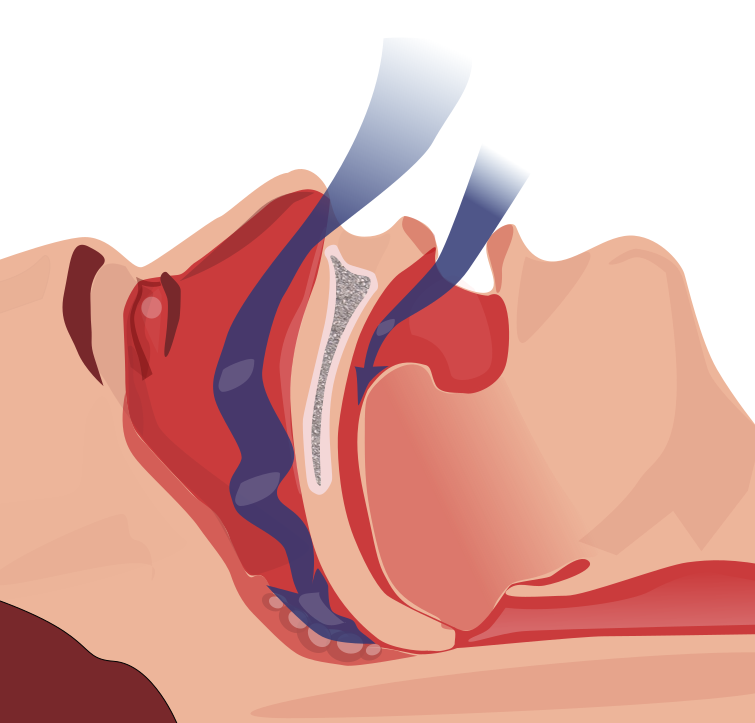
Example of an obstructive apnea,
in which air cannot be inhaled
because of a physical blockage
in the upper airway.
APNEA
A complete cessation of airflow for at least ten seconds during sleep. Apneas may be central, obstructive, or mixed.

CENTRAL APNEA (aka CSA)
A complete cessation of airflow and respiratory effort for at least ten seconds during sleep.

OBSTRUCTIVE APNEA (aka OSA)
A full cessation of airflow for at least 10 seconds during sleep which is associated with a continuation of respiratory effort.

MIXED APNEA (aka COMPLEX APNEA)
A full cessation of airflow for at least ten seconds which begins central (no associated respiratory effort) and ends obstructive (respiratory effort).

Links to learn more:


____________________

SOURCE for DEFINITIONS:
Spriggs, WH. (2010.) Glossary. In Essentials of Polysomnography (pp585-606). Sudbury, MA: Jones and Bartlett Publishers

20 September 2014

Guest Post || Edward Grandi on Sleep Apnea: What is it and what can I do about it?


"My bed partner tells me I snore and sometimes stop breathing while I am asleep... Should I be concerned?"


Snoring and pauses in breathing happen even in healthy people, especially when they sleep on their back or consume alcoholic beverages too close to bedtime.

Edward Grandi served as
executive director of the
American Sleep Apnea
Association from 2004 to
2014. During his tenure he
contributed significantly to
raising the visibility of the
ASAA in the public media
and the sleep community. He
is considered a subject matter
expert on sleep apnea and
continues to serve as a
resource on the subject.
These events, called apneas or hypopneas (partial or complete obstructions that result in reduced airflow to the lungs) become an issue when they happen often during sleep and over many sleeping periods during the week.

There are two issues related to apnea that can have far-reaching effects on someone's health. First is the fragmentation of sleep. Second is the reduction in blood oxygen necessary to support vital organs.

Fragmented sleep 
This happens when sleep interrupted by brief awakenings or arousals that take place as the body restarts breathing after these pauses occur. Such pauses in breathing, to be medically significant, must last 10 seconds or longer and occur, on average, more than 5 times per hour of time asleep. 

The arousals that follow do not necessarily result in waking up, but often move the sleeper to a lighter stage of sleep. These pauses and consequent arousals disrupt the normal sleep cycle, leading to fragmented sleep. This prevents the sleeper from benefiting from deeper stages of sleep, when the body is most relaxed and key restorative processes can take place, including during Rapid Eye Movement (REM) or dream sleep. People experiencing fragmented sleep complain of waking up not feeling refreshed from their sleep.

Reduction in blood oxygen
The frequent pauses in breathing that cause partial or complete obstruction of air entering the lungs (hypopneas and apnea) result in less oxygen in the bloodstream and, in turn, to organs like the heart, kidneys and brain. The result is hypoxia, the medical term for no oxygen in the blood. This can be serious if it occurs frequently or chronically. The body, starved of oxygen, will take measures to keep breathing, including arousing as mentioned above. The result to a human body subjected to this oxygen starvation for long enough is death.

What is sleep apnea? 
The symptoms of obstructive sleep apnea (OSA), the medical condition that results from experiencing many apneas and hypopneas during the course of the night, can vary. Among them are excessive daytime sleepiness, morning headaches, increased irritability, depression, high blood pressure, weight gain and erectile dysfunction. The list continues to grow as more research is done.

Risk factors for OSA
Simply put, everybody is at risk for OSA--both old and young, male and female, obese and normal weight, adults and children. It is a fallacy to think that OSA only affects overweight middle-aged males. 

It doesn't take much for the opening to the upper airway to be blocked either partially or completely. A large tongue, a narrow or crowded opening to the upper airway due to fatty tissue, a long uvula... all these can contribute to having OSA.

Diagnosing and Treating OSA 
The best way to know for certain if you have OSA is to have a physical examination that includes medical history plus a sleep study, which can take place either in the home or in a sleep lab. Depending on the type of sleep study you need, the test will gather information about your breathing (or lack of breathing) during sleep. 

On the basis of that information, the severity of your condition is determined by way of a measurement called the Apnea Hypopnea Index (AHI). The basic index formula is: 
AHI = apneas+hypopneas/
hours asleep or in bed

On the basis of these results, the treating physician will make some recommendations on how to improve your sleep by reducing or eliminating these apneas and hypopneas.

There are a number of treatment options for OSA, with more being developed based on research. Which treatment is right for you depends a lot on the severity of your OSA and what you can tolerate. This should be the subject of a discussion between you and your treating physician.

In the meantime, if your bed partner tells you that you snore and sometimes stop breathing while asleep, and if you also awaken not feeling refreshed in the morning, here are some things you can do right away that may help:

  1. Avoid sleeping on your back. When you sleep on your back, you increase the likelihood that your mouth will come open and your tongue will slide back to block the opening to your upper airway.
  2. Breath through your nose. Make certain not to experience nasal congestion when going to sleep. This will reduce the chances of mouth breathing.
  3. Practice good sleep hygiene. Check out these 12 simple tips to improve sleep
If, after you try these tips, you are still snoring and having frequent pauses in breathing, and you continue to awaken feeling unrefreshed after a night's sleep, please consult a physician qualified in sleep medicine to further determine the kind of problem you have and how to treat it.

Healthy sleep is the key to a healthy life. --Edward Grandi

© Edward Grandi 2014, All Rights Reserved

19 August 2014

AASM News Headlines, Summer 2014 Edition: New insomnia pill; Pledge to "stop the snore;" Relaxis Pad for RLS; CDC shows striking rise in sleep related clinic visits

Here are some links to AASM news posted between June and mid-August 2014. For more news, visit the AASM here.

FDA approves new sleeping pill Belsomra (suvorexant) for insomnia
Suvorexant (Belsomra) tablets were approved by the FDA on August 13, 2014 for the treatment of insomnia. Suvorexant is a receptor antagonist for the neurotransmitter orexin; it functions by altering the brain's chemical signals responsible for regulating the sleep-wake cycle. Studies show that patients taking suvorexant tend to fall asleep faster and spend less time awake after sleep onset when compared to those taking placebo. Next-day drowsiness is the medication's most common side effect. More information

Stop the snore: AASM urges sleep apnea action for those at risk
Obstructive sleep apnea (OSA) is a potentially life-threatening disease that afflicts at least 25 million American adults. Untreated OSA can increase your risk for serious health problems like heart disease, stroke, diabetes and depression. Did you know that snoring is its most common warning sign? If you snore, or you know someone who snores, it's worth checking out, as OSA is fairly simple to treat. Interested in "stopping the snore?" Take the Pledge.

FDA clears the Relaxis Pad for treatment of restless legs syndrome
A new nonpharmaceutical treatment for Restless Legs Syndrome (RLS), a health condition that can significantly disrupt sleep patterns, is now available through Sensory Medical. The Relaxis Pad is a noninvasive device which emits vibratory counterstimulation to relieve pain and tension in the legs at bedtime. As many as 12 million Americans suffer from RLS, which can rob the body of deep, restorative sleep. Many sufferers go undiagnosed as the symptoms of RLS often resemble stress, arthritis, muscle cramps, or are often attributed to the “normal effects” of aging. Its nonpharmaceutical value makes the Relaxis Pad a breakthrough medical device for many. More information

CDC study examines national trends in office visits for sleep problems
The number and percentage of office visits for sleep related problems, and the number and percentage of office visits accompanied by a prescription for a sleep medication, have increased significantly since 1999. Most striking were increases in the number of office visits resulting in the acquisition of prescription sleep aids. Read the abstract here.

The American Academy of Sleep Medicine (AASM) is the only regulatory, professional organization dedicated exclusively to sleep health. It sets standards and promotes excellence in sleep-related healthcare, education and research and is comprised of nearly 12,000 accredited sleep labs and sleep professionals across the US.