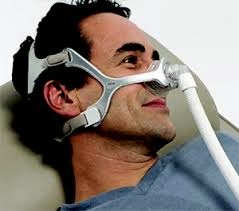
Showing posts with label nasal mask. Show all posts

14 December 2015

SLEEP HYGIENE TIP OF THE WEEK: Using CPAP with a head cold


When the cold and flu season hits, the inconvenience of dealing with viral symptoms can be magnified if you're also using a PAP device (CPAP, BiPAP, APAP). Some people think it is better not to use your PAP therapy at this time, but the truth is, you still need it, even if you experience more discomfort while asleep. Your body will get through a respiratory illness more quickly if you continue your therapy because it will have more sleep (even if it doesn't consciously feel like it).

Here are some tips to stay the course through those nights when sore throats, runny noses, congested sinuses and coughs crop up this winter.
  1. Adjust your sleeping position. A runny nose or congestion can make breathing very comfortable while you sleep. Try sleeping on your side, which will use gravity to drain your sinuses (one side at a time). If you have a reclining chair, that might also be helpful for the same reason. You don't want phlegm collecting in the back of your throat, which will just worsen matters. Avoid sleeping on your back or completely flat; even elevating the head of your bed by 3 inches can make a big difference.
  2. Make sure you use your humidifier. The warm moist air will really help your passages remain pliable and comfortable through the course of a virus.

    If you don't know how to use your humidifier, ask the CPAP specialist who initially set you up with your current machine. Some people normally don't use the humidifier, but may turn it on just for head colds or allergies.

    If you have an older machine, it may not have a humidifier, or if it has a humidifier, it may not have a heated setting. If you get a lot of respiratory illnesses during the winter, you should ask your doctor about updating your machine to one with a heated humidifier.
  3. Try using nasal sprays. These can be a quick, easy and affordable solution. Look for sprays which are designed for decongestion. Even a simple saline nasal spray (or gel) can help relieve stuffiness. If you have allergies, opt for a spray with an antihistamine in it, if you don't already have one.

    Avoid any over-the-counter spray which causes sedation; this can worsen your apnea. Unsure which spray is best for you? Ask your pharmacist.
  4. Similarly, consider menthol. Menthol can help to clear blocked nasal passages pretty swiftly.

    You won't want to suck on menthol drops while trying to sleep, as that is an obvious choking hazard, but you could have a drop right before bed to help open up your airways.

    Also, 15 minutes before bed, try rubbing a little menthol ointment on your chest and let the vapors rise and help decongest your airways before applying your mask.

    Sometimes the challenge is just getting to sleep; once asleep, the humidity from PAP therapy can often take over and keep everything clear.

    Please do not add menthol products to your PAP humidity reservoir without first checking with your mask and PAP machine user's manuals to ensure you can safely do so; if so, they will also advise on which kinds of menthol products and how much to use.
  5. Try cleansing your sinuses with a neti pot. These are little bulb- or teapot-shaped vessels that help you to flush your nasal passages out. They can be found in most drugstores and are often an effective pre-sleep solution for anyone with a problem with congestion.
  6. Switch to a different style mask. There are many patients who have more than one mask. They use their nasal or pillow mask for normal use but switch to a full-face mask if they find they are breathing through the mouth, as full-face masks cover both mouth and nose and allow for oral breathing. Pillow masks are sometimes difficult to wear if the nose it sore and swollen; a nasal mask might be a good alternative if you aren't mouth breathing. However, having a head cold leads to mouth breathing even in those who don't normally do so; it might be worth it to look into having a spare full-face mask on hand for this reason.
  7. If you use CPAP, consider APAP. This is a more expensive solution but if you suffer from seasonal allergies or viruses on a regular basis, the "smart technology" in an AutoPAP (or APAP) might help you breathe better when congestion is a regular problem. The APAP delivery system senses your need for more or less pressure and automatically adjusts, unlike the CPAP which, as its names suggests, only delivers one continuous pressure. Discuss this option with your physician; you will need a prescription in order to acquire one of these.

Here's what a simple neti pot looks like; there are also
more extravagant ones, but a simple over-the-counter
product can be just as effective.
Finally, keep everything clean! You should be vigilant about cleaning your PAP tubing and mask anyway, but if not, NOW is the time to change that bad habit to make it a regular part of your daily routine. Learn some basics here.
Keeping your tubing, masks and accessories clean and sterile is necessary to prevent the growth of bacteria inside your equipment, which can actually make you even sicker (or cause illness when you aren't sick).

Follow manufacturer's instructions for cleaning your PAP-related items or, if you know you are just not going to follow through on a daily regimen, look into one of the new PAP cleaning kits now available which sanitize all of your items with the push of a button.

18 October 2014

CPAP Central || A Season for Masks || Smaller Might Be Better

Respironics Go Life nasal pillows are easy to adjust and designed
to handle both CPAP and BiPAP prescriptions.
People often think that, once diagnosed with apnea and in need of PAP equipment, they will be limited to something more akin to a hockey mask than to what is actually available. Believe it or not, not all positive airway pressure (PAP) systems require a large mask.
Philips Respironics Nuance Nasal Gel Pillow employs comfort
gel technology with the same ultra-soft materials used in NICU
units to provide a super soft headgear that doesn't irritate skin. 

If you have been given a prescription for CPAP, BiPAP or AutoPAP, you need to check with your physician to see if you can opt for one of the smaller masks available. Note: Not everyone can wear a smaller mask due to facial physiology, facial hair or the amount of pressure necessary for PAP to be successful... but if you have a lower pressure and your facial landscape can support a smaller mask, it might be worth looking into. So go ahead and ask!

There are two main varieties of PAP masks which come in smaller shapes and sizes, often with minimal headgear as well.

NASAL PILLOWS 

These small devices aren't technically masks, but small pressure delivery devices which reside right inside your nostrils. For people who do not like the feeling of headgear on the face and scalp, these can be a good option as they offer minimal fitting with headgear.

ResMed claims its AirFit™ P10
Nasal Pillow is one of the quietest
pillow PAP delivery systems
available on the market.
The ResMed Swift FX for Her
has soft headgear and a smaller
pillow design for the female face.
The ResMed Mirage Swift Nasal
Pillow has a unique barrel-
shaped pillow design.

Nasal pillows may require some adjustment to the direct delivery of air pressure through your nostrils, as you cannot get a good return on this form of mask if you normally breathe through your mouth. Often noted in early use of nasal pillows during the initial adjustment period is a feeling of "not being able to breathe out against the incoming air." This is easily addressed, as PAP machines have special settings which can be adjusted to help with exhale pressures while using nasal pillows.

NASAL MASKS

The Respironics Wisp stays put with light, supportive
headgear. It easily detaches from the tubing for quick
trips to the bathroom at night. You can also hook the tubing
into the top of the headgear to redirect it toward your
headboard to reduce tangling with it.
ResMed's Swift Nano nasal
mask is very lightweight
and adjusts to different
nose bridge lengths. It comes
with minimal headgear.
These are smaller, more lightweight versions of the classic masks that most people associate with PAP therapy.

The Mirage FX by ResMed is small,
stable and fits to most facial features.
It has a great reputation for
preventing leaks, too.
Many people who have been on PAP therapy for years may not even know they have some options now that include fixing the tubing up and over the head for better sight lines and less tangling, as well as softer or, in some cases, minimal headgear. Many of these newer masks are very effective in keeping down leak and staying put and can make all the difference if comfort with a larger mask is an issue.


CHIN SUPPORTS 
A chin support can help draw the jaw shut
until you relearn to breathe only through your
nose while using PAP therapy, which is how
you should breathe naturally.
Those who breathe through their mouth may try using smaller mask options if they are willing to also use a chin support device in order to preserve the pressure therapy they have been prescribed. Chin supports help keep the jaw aligned and prevent the mouth from opening and breaking the critical pressure seal that is the key feature of PAP therapy.

03 September 2014

CPAP Central || Is CPAP therapy covered by insurance?

Three kinds of CPAP masks:
L to R--Nasal mask, nasal pillow, oronasal mask
Once a person is diagnosed with obstructive sleep apnea, of their main concerns might be affording the equipment and getting insurance reimbursement. Machines can cost in the hundreds of dollars, and they require additional supplies, like masks and tubing. The good news is that most insurance policies cover PAP therapies (including CPAP, BiPAP and other pressure support systems designed to treat sleep-disordered breathing). How much one insurer will pay depends upon whether you have one insurance plan or a secondary plan.

PAP machines fall into the category of Durable Medical Equipment (DME); to find out what your insurance company will reimburse for, you can call them and ask about deductibles and copayments for DME, which are typically paid for separately from doctor's visits or lab or home sleep studies. Keep in mind that Medicaid will require authorization in order to reimburse for PAP equipment. Most other supplies (masks, tubing, etc.) are covered separately, with reimbursement amounts varying state by state.

Be aware that insurers differ on how many masks and other supplies they will reimburse over the course of a year, and that you may need to replace a mask before your insurance company is willing to reimburse you for it. It is often recommended that masks be replaced every six months, but not every insurance company will reimburse that frequently. You will need to check with your insurer to know for sure what your coverage allows.